Irrigation Science: Evapotranspiration and Hydrozones
For a designer, ignoring ET means navigating blindly. A fescue lawn in summer can consume up to 5-6 mm of water per day. If your system provides 3, the lawn will turn yellow. If it provides 9, you are wasting valuable resources and favoring fungal diseases. SprinklerMap allows you to calculate the Precipitation Rate (PR) of your sprinklers to exactly match the local ET.
1. Evapotranspiration (ET): The Lawn's Thirst
Evapotranspiration is the sum of two distinct processes: evaporation of water from the soil and transpiration from plant leaves. It is a dynamic value, measured in millimeters per day (mm/d), which varies based on temperature, humidity, wind, and solar radiation.
For a designer, ignoring ET means navigating blindly. A fescue lawn in summer can consume up to 5-6 mm of water per day. If your system provides 3, the lawn will turn yellow. If it provides 9, you are wasting valuable resources and favoring fungal diseases. SprinklerMap allows you to calculate the Precipitation Rate (PR) of your sprinklers to exactly match the local ET.
2. Millimeters per Square Meter: The Mathematics of Water
Many confuse liters with millimeters. In irrigation, the master unit is the millimeter of water equivalent. One millimeter of water on one square meter corresponds exactly to one liter.
Base Formula: If a sprinkler has a flow rate of 10 liters/minute and covers an area of 50 sqm, how much water is it distributing?
10 l/min * 60 min = 600 liters/hour.
600 liters / 50 sqm = 12 mm/hour.
This value, the Precipitation Rate (PR), is crucial. If the daily ET is 6 mm, with a system delivering 12 mm/hour, 30 minutes of irrigation will suffice. Without this calculation, controller timers are set safely at random. SprinklerMap automates this calculation, providing precise data for each zone.
3. Hydrozone Configuration: Divide and Conquer
Not all plants drink the same way. A classic mistake is mixing sprinklers watering the lawn (high need) with drippers for hedges (low need) or, worse, putting static sprinklers (high precipitation) in the same zone as rotors (low precipitation).
Creating Hydrozones is the practice of grouping plants by water need and sun exposure.
- Sunny Lawn Zone: Maximum demand (100% ET).
- Shady Lawn Zone: Reduced demand (60-70% ET).
- Shrub/Hedge Zone: Drip irrigation, localized.
Correctly dividing zones in SprinklerMap is not just a matter of graphical order, but of hydraulic efficiency. Each "Zone" in the software corresponds to a solenoid valve in reality. Designing homogeneous zones will allow you to set differentiated irrigation times, saving water and ensuring plant health.
4. The Vegetation Factor (Kc): Tell me what you plant...
Not all plants drink the same way. The crop coefficient (Kc) varies enormously:
• Cool Season Grass (English Lawn): Fescue, Ryegrass, Bluegrass. They love cool weather and drink a lot (Base ~5.0 mm/d).
• Warm Season Grass (Rustic Lawn): Bermuda, Zoysia, Paspalum. They go dormant in winter and resist drought (Base ~3.5 mm/d). Water savings of 30-40%.
• Low consumption alternatives: Clover and Dichondra (Base ~4.3 mm/d).
• Hedges and Shrubs: Generally ~3.0 mm/d, but drip irrigation is more efficient.
By selecting the correct type in the editor, SprinklerMap automatically recalculates the target ET.
5. Microclimate: Shade is Gold
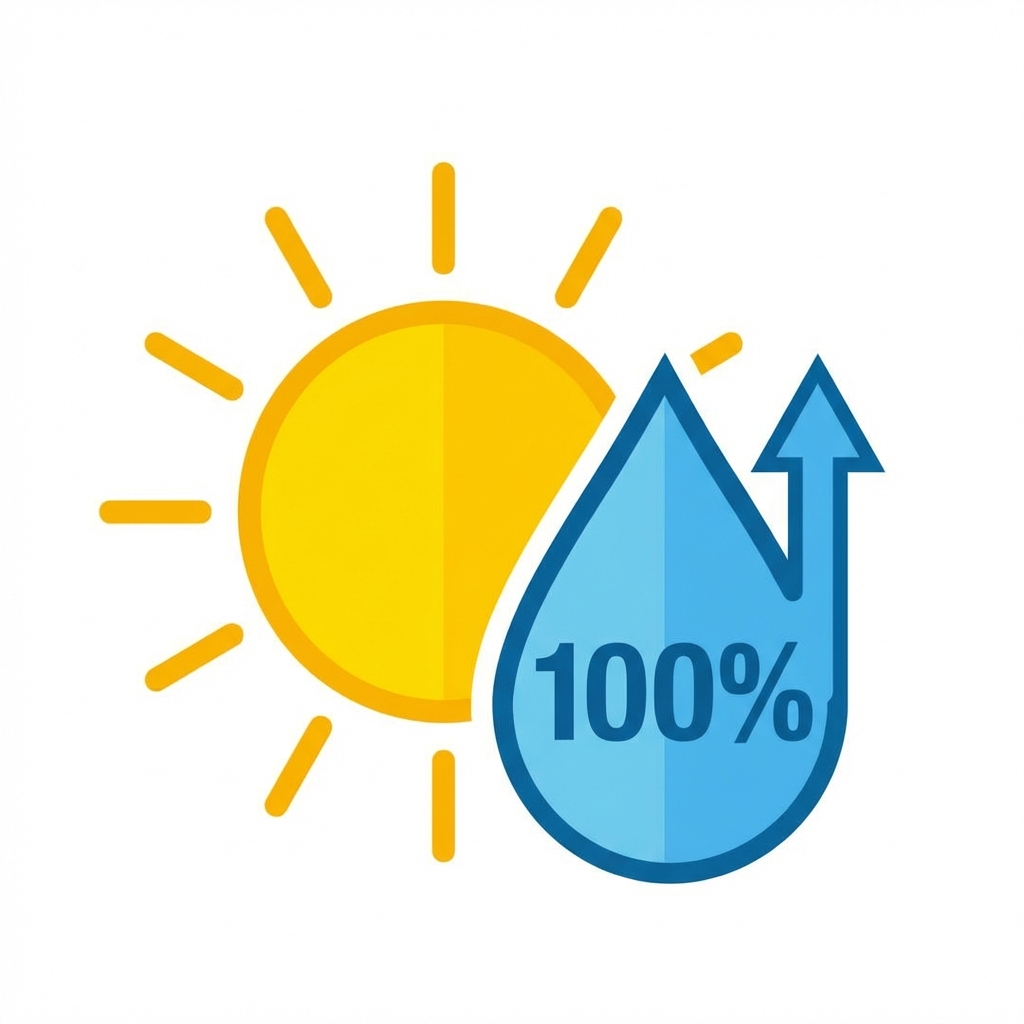
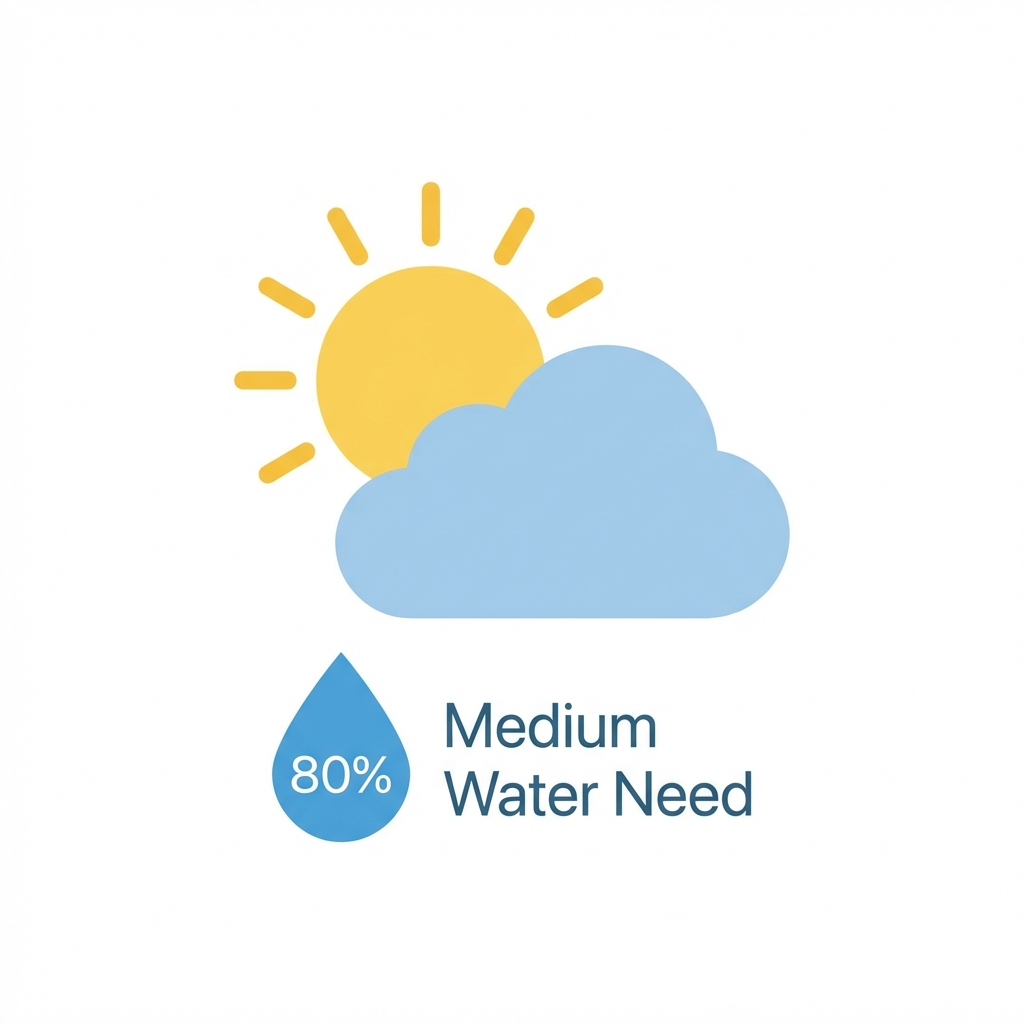
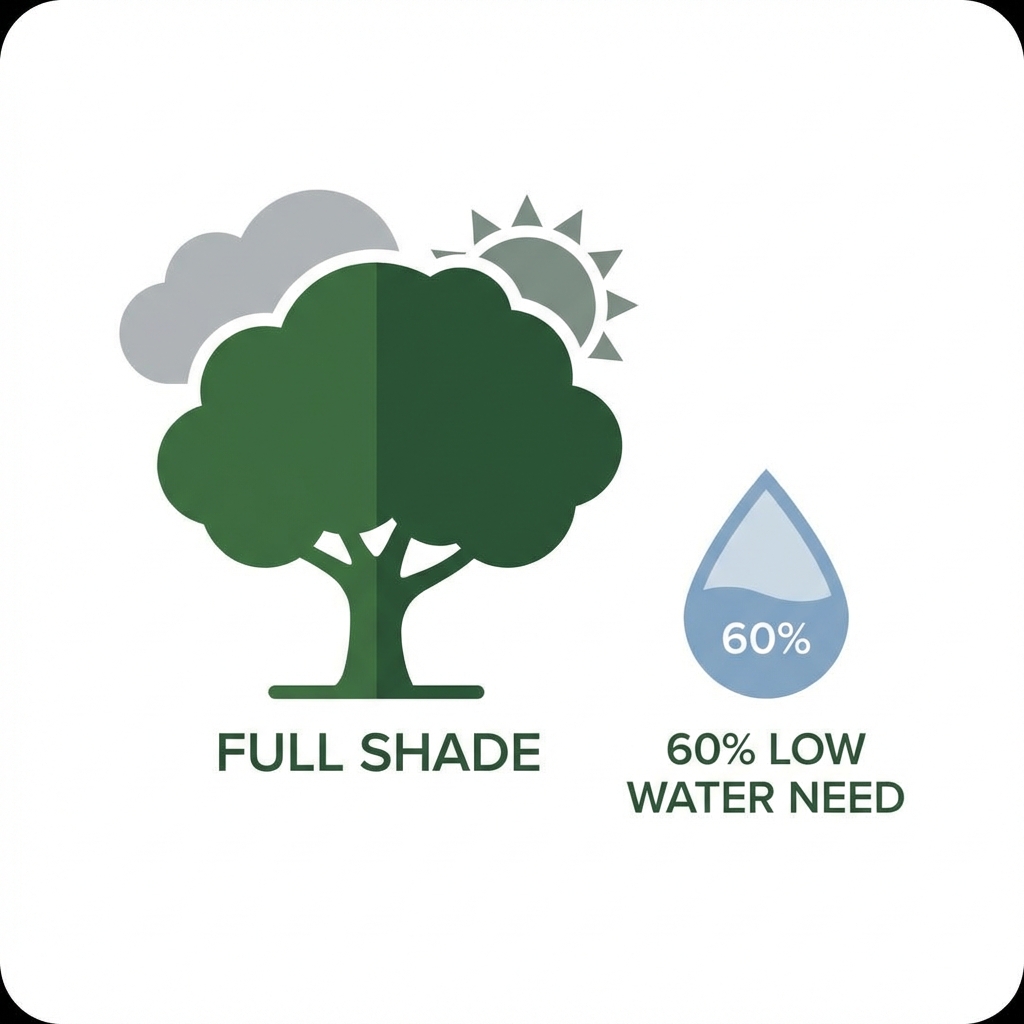
Solar exposure is the final multiplier. To choose the right value, count the hours of direct sun on a representative summer day, when the system is actually under stress: bright light is not enough, the lawn or bed must receive direct rays.
• ☀️ Full Sun: 6 or more hours of direct sun per day, especially if they include the warmer late-morning and afternoon hours. This fits open south/west-facing lawns or areas without major shade: 100% of need (x1.0).
• ⛅ Part Shade: 3-6 hours of direct sun per day, or morning sun with shade during the hottest hours, or filtered shade from open tree canopies for part of the day. In practice, choose part shade when the area is not dark, but direct sun reaches it for only half a day or in moving patches: 80% of need (x0.8).
• ☁️ Shade: less than 3 hours of direct sun per day; typical of north-facing sides, dense tree cover, high walls, or courtyards that receive mostly diffuse light. In deep shade, turf may struggle to grow, so reducing water does not always solve the agronomic problem: 60% of need (x0.6).
Practical method: check the same zone at 9:00, 12:00, 15:00 and 18:00 in spring-summer and count only the intervals with direct sun. If direct sun arrives mostly after 12:00, choose the more demanding category when in doubt, because afternoon sun weighs more on evaporation. Strategy for Mixed Zones: If your garden has zones with different exposures, the golden rule is to divide them into distinct Hydrozones. If you cannot separate them (single valve), you must choose: set for sun (and risk fungus in shade) or for shade (and risk dry spots in sun)? Advice: Select "Part Shade" as a compromise and monitor.
6. Distribution Uniformity (DU)
Another vital parameter is Distribution Uniformity (DU). Even if the average PR is correct, poor sprinkler arrangement can create dry spots and flooded zones. The goal is to overlap sprays ("Head-to-Head coverage") to ensure water reaches everywhere with the same intensity. SprinklerMap visualizes overlaps and calculates percentage coverage, allowing you to adjust aim before digging.
🚿 7. DIY Test: Measure Water Flow
Water flow affects how sprinklers perform. Here is a simple bottle test to measure the flow rate at your tap:
Materials: An empty 1.5 liter bottle, an external tap (where you will connect irrigation), a timer.
Procedure:
1. Open the tap fully.
2. Fill the 1.5 liter bottle.
3. Time how many seconds it takes to fill completely.
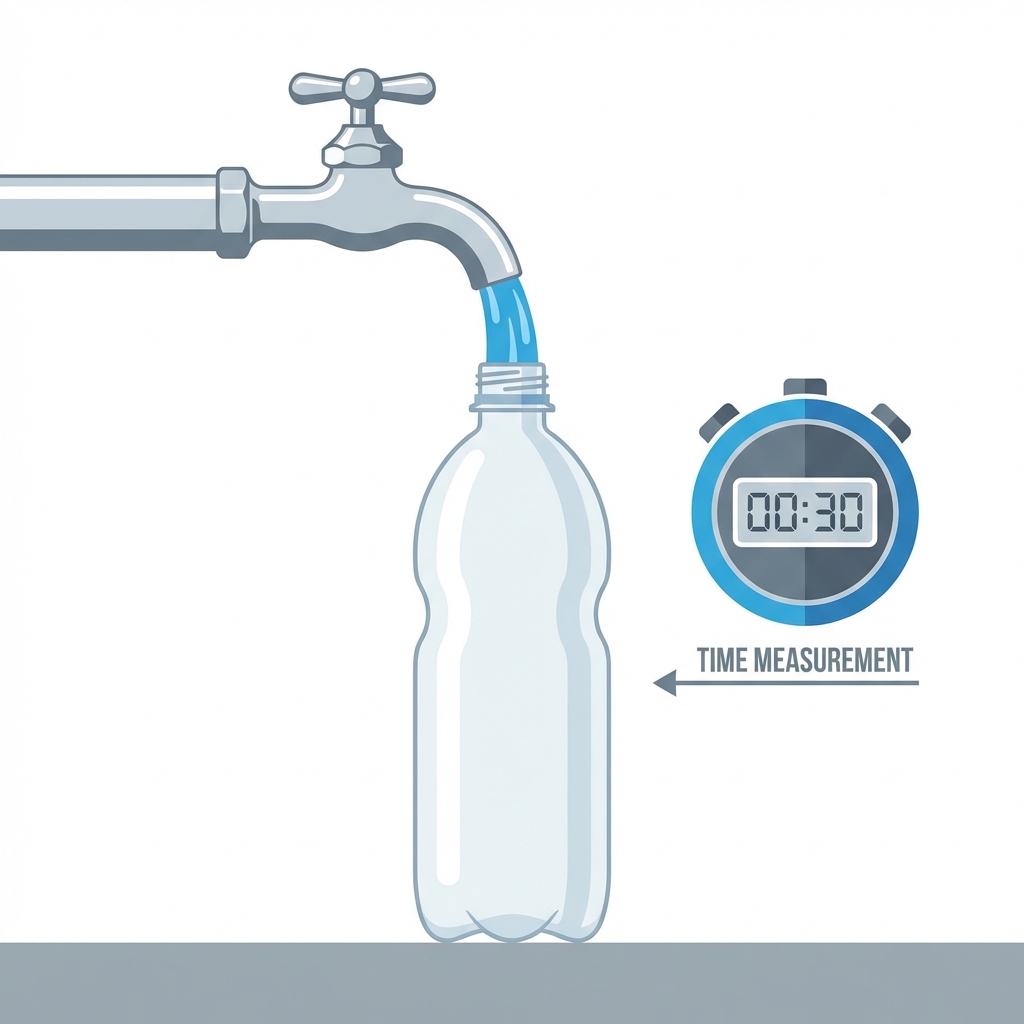
Flow Calculation:
Flow (L/min) = 1.5 × 60 ÷ time_seconds
Example: 1.5L in 6 seconds → 1.5 × 60 ÷ 6 = 15 L/min
Note, this is not a pressure test:
Fill time only measures flow rate (L/min), not pressure — pressure also depends on outlet diameter and friction loss. To measure pressure you need a gauge connected to the tap — see How to measure water pressure for irrigation.
Use the measured flow rate to check compatibility with the sprinklers you plan to install (see the manufacturer's spec sheet). For the editor's "Pressure" field, measure with a gauge or use the default value of 2.5 bar (typical in homes).
🧪 8. DIY Test: Know Your Soil
Before designing, it is fundamental to know the soil type. Here is a simple infiltration test you can do in the garden:
Materials: The same 1.5 liter bottle used for pressure test (cut the bottom!), a ruler, water, timer.
Procedure:
1. Insert the bottle into the soil for about 5 cm.
2. Pour water to reach a level of 10 cm.
3. Start timer and measure how long it takes for water to infiltrate completely.
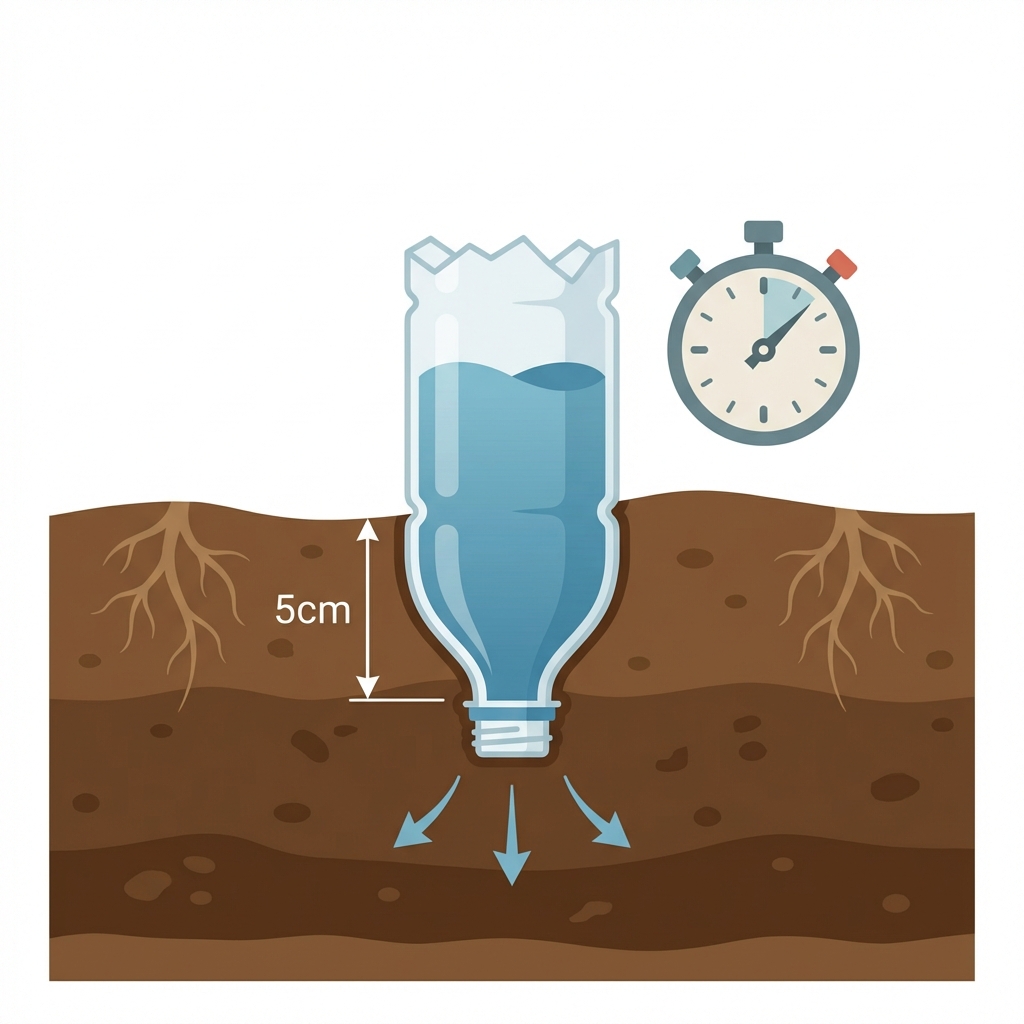
Interpretation:
• Less than 10 minutes → 🏖️ Sandy Soil (high infiltration)
• 10-30 minutes → 🌱 Loam Soil (medium infiltration)
• More than 30 minutes → 🧱 Clay Soil (low infiltration)
Use this result to select the correct soil type in the SprinklerMap editor.
In Conclusion...
Smart irrigation is not magic, it is applied physics. Using SprinklerMap calculation tools to analyze ET, PR, and DU, you go from being simple "waterers" to true managers of water resources. This approach will not only save on bills, but is the only ethical and regulatory way to manage greenery in the 21st century.