Can an Algorithm Prevent Runoff Better Than a Smart Controller? The WaRPIC Paper Tested It in the Field
WaRPIC (Texas A&M, BuildSys 2019) uses a machine learning model trained with the homeowner's help to predict the maximum irrigation runtime before runoff: in testing it wasted only 2.6% of the water lost by a commercial smart controller.
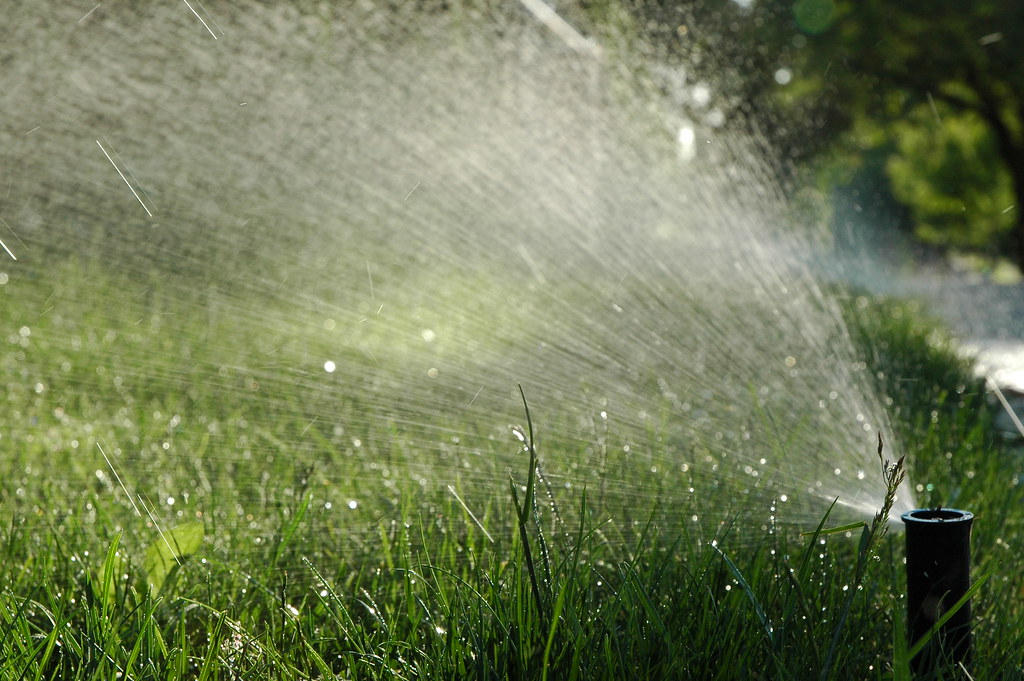
The smart controller isn't enough: the problem nobody admits
Anyone who has installed a smart controller (Rachio, Hunter Hydrawise, Rain Bird) for irrigation often assumes the runoff problem — water running off onto the sidewalk instead of soaking into the soil — is solved: after all, the controller knows the weather forecast and skips irrigation when rain is predicted. A team of researchers from Texas A&M (Computer Science and Biological & Agricultural Engineering) tested that assumption, and the result, published at BuildSys 2019 — the ACM conference on systems for energy-efficient buildings — is blunt: even advanced smart controllers still cause runoff, because they make a simplifying assumption about soil infiltration capacity that in reality keeps changing.
Their answer is called WaRPIC (Weather-aware Runoff Prevention Irrigation Control): not a new controller to buy, but a low-cost module that retrofits the one you already have, paired with a machine learning model trained on your specific garden's data — not on a generic assumption meant to apply to 'every soil'.
The paper at a glance
| Section | Content |
|---|---|
| 🎓 Paper | Murthy, A., Green, C., Stoleru, R., Bhunia, S., Swanson, C., Chaspari, T. (2019). Machine Learning-based Irrigation Control Optimization. Proceedings of BuildSys '19 (6th ACM International Conference on Systems for Energy-Efficient Buildings, Cities, and Transportation), 213-222 |
| ❓ Question | Can irrigation runoff be prevented more accurately than commercial smart controllers manage, without installing expensive ($500+) soil moisture sensors in every zone? |
| 🔬 What they did | Developed WaRPIC: a low-cost hardware module that retrofits any existing controller via its rain-sensor port, paired with a machine learning model trained on 15-20 homeowner-guided observations, which learns the Maximum Allowable Runtime (MAR) before runoff for each individual zone |
| 📈 What they found | A neural network trained on data augmented via pseudo-labeling predicted MAR far better than classical regression models; in a head-to-head comparison, WaRPIC wasted only 2.6% of the water lost by a commercial smart controller in the same test (4.08 gallons versus 156.72) |
| 🌱 What it means for your garden | The factor that drives runoff most isn't how much it's raining today, but how much water the soil has already absorbed over the previous 7 days — something no fixed-schedule controller knows, and that even many 'smart' controllers estimate poorly on a per-zone basis |
| 🗺️ How it connects to SprinklerMap | Confirms, from a different angle, the same underlying principle already seen in the first two articles of this series: the variable that decides whether runoff occurs isn't a universal number but depends on the specific site — which is why SprinklerMap focuses on what can be guaranteed with certainty upfront: correct pressure, flow, and coverage per zone |
| 📚 References | See the References section at the end of the article |


The question: why even smart controllers get it wrong
Runoff isn't just wasted water: it carries sediment, fertiliser chemicals, and other contaminants, causing what specialists call non-point source pollution of waterways. The standard way to prevent it is the cycle-and-soak method: instead of watering for 20 minutes straight, the runtime is split into shorter cycles separated by pauses that let the water be absorbed.
The problem, the authors explain, is calculating correctly how long each cycle should run before surface ponding forms — the so-called Maximum Allowable Runtime (MAR). Commercial smart controllers estimate MAR with a formula that assumes constant soil infiltration capacity over time. But decades of soil-science research (cited in the paper) show that infiltration varies continuously with the season, slope, soil composition, and even time of day. An assumption of constancy, however convenient to programme, is simply false — which is why even a well-configured 'smart' controller can keep causing runoff.
What they did: a model that learns from your garden, not a generic formula
Instead of chasing an ever more complex physical formula (an approach already tried in earlier work using differential equations, but with hardware costs too high for residential use — a dedicated sensor network for every zone), the authors took a different route: turning the problem into a supervised learning task, using human observation as the sensor.
During a 2-3 week data-collection phase, the homeowner runs the sprinklers in each zone and watches for visible surface ponding — that moment is the MAR for those conditions. Then, to work out how long the soil needs to recover its absorption capacity, short 10-second test bursts are run every 5 minutes until the water is absorbed immediately again. Repeating this 15-20 times at different soil saturation levels produces a dataset specific to that garden, with three input variables: evapotranspiration (ETO), water applied over the previous 7 days from rain plus irrigation (AWA), and days since the last irrigation (LWA).
With only 15 real samples, the problem is too small for a traditional neural network. The authors solved this bottleneck with pseudo-labeling, a semi-supervised learning technique: a first model (Ridge Regression, the best performer in cross-validation on the original 15 samples) generates predictions on 202 unlabeled historical weather observations (2015-2018), growing the training set from 15 to 220 samples — enough to train a neural network reliably.
What they found: the numbers from a head-to-head test against a real smart controller
On the augmented dataset, the neural network clearly beat every classical regression model tested: mean squared error (MSE) of 0.43 versus 0.63 for Ridge Regression, the best of the traditional alternatives, with an R² of 0.63 versus 0.45.
The more interesting test, though, is the direct comparison against a real commercial smart controller (set to its most advanced available mode, 'Flex Monthly', which only skips irrigation if it detects recent rain and saturated soil). In four experimental trials, WaRPIC's predictions came very close to the actual ground-truth MAR measured on site, while the smart controller's predictions systematically overshot it. Converting the difference into wasted water (using flow tables for 5/8" PVC pipe), the result is stark: 4.08 gallons lost by WaRPIC versus 156.72 gallons lost by the smart controller over the same set of trials — a waste of only 2.6% of the commercial competitor's.
The authors then deployed WaRPIC modules in the homes of 12 families in a Texas city, in basic mode. Using the previous season's (May-October) watering recommendations, they estimated an average saving of 38,826 gallons of water and $192.53 per household over the irrigation season, ranging from 8,640 to 111,780 gallons depending on garden size and characteristics.
What it actually means for your garden
The most useful point of this paper, beyond the numbers, is conceptual: runoff doesn't depend (only) on today's rainfall, but on how much water the soil has already accumulated over recent days from rain and past irrigation. Two days that look identical for current weather can have very different MARs if one follows a dry week and the other follows days of rain — a variable a fixed-schedule programme ignores entirely, and that even commercial 'weather-based' controllers only partly account for.
In practice, this translates into advice that applies even without any smart hardware: after a period of rain, even heavy rain, the soil may need more time — not less — before it absorbs water well again in a new irrigation cycle, because its infiltration capacity stays temporarily reduced. Cycle-and-soak (short cycles with pauses between them) remains the simplest way to prevent runoff even without a predictive model, by manually splitting irrigation instead of delivering it all in one long session.
How this connects to SprinklerMap
This paper too confirms, from a different practical and experimental angle than the first two articles in this series, the same underlying principle: runoff and water need depend on site-specific variables (slope, soil type, recent irrigation history) that no generic formula or controller can know precisely in advance — real data collected on that specific plot is required, as WaRPIC does with homeowner observations.
SprinklerMap doesn't estimate MAR or model soil infiltration capacity: the tool handles the hardware precondition that makes any irrigation cycle, short or long, make sense in the first place — uniform coverage and correct pressure per zone. A poorly designed system can cause pooling at one spot even with a perfectly calculated MAR, simply because it delivers twice as much water there as elsewhere in the zone. For the cycle-and-soak planning side based on your own soil, see /enHow to set irrigation run times by soil type.
The short version
Even a well-configured smart controller can keep wasting water to runoff, because it relies on an assumption — constant soil infiltration capacity — that reality keeps disproving. WaRPIC shows that a model trained on a single garden's specific data, with the bare minimum of human observation instead of expensive sensors, can cut runoff water waste to a fraction (2.6%) of what an advanced commercial controller loses. The practical takeaway holds even for anyone who'll never use a system like this: runoff depends on your soil's recent rain and irrigation history, not just today's weather.
References
Murthy, A., Green, C., Stoleru, R., Bhunia, S., Swanson, C., Chaspari, T. (2019). Machine Learning-based Irrigation Control Optimization. Proceedings of the 6th ACM International Conference on Systems for Energy-Efficient Buildings, Cities, and Transportation (BuildSys '19), 213-222. doi.org/10.1145/3360322.3360854
First article in this series: Why Evapotranspiration Is the Foundation of Modern Irrigation — /en/blog/evapotranspiration-modern-irrigation-fao56-explained
Second article in this series: How Reliable Is the FAO-56 Method? — /en/blog/how-reliable-is-fao56-method-2015-review
Frequently asked questions
Can I buy WaRPIC as a product?
No: it is an academic research prototype described in a 2019 paper (Murthy and colleagues, Texas A&M, presented at the BuildSys conference), not a device on sale. It is still worth reading, because the underlying idea is in principle repeatable: it is not a new controller to buy but an inexpensive module that plugs into the one you already have, through the rain-sensor port. What you can take home from it today is not the hardware but the finding: the variable that decides whether water runs off is not how much rain fell today, but how much the soil has already absorbed over the previous seven days. That is a criterion you can apply by hand to your controller schedule, without buying anything.
Do I need soil moisture sensors to use this approach?
No, and that is the paper's starting point. The authors tested inexpensive soil moisture sensors and found them too imprecise outdoors, while reliable ones cost 500 dollars or more per zone, a figure that makes the approach impractical on a residential system with four or five zones. WaRPIC exists to get around exactly that obstacle, because the model uses only weather data and the history of irrigation already carried out, with nothing buried in the ground. It is a design choice rather than a compromise: in the direct comparison described in the paper the system wasted only 2.6% of the water, so doing without sensors did not mean doing without precision.
Does this work with any existing controller?
Almost any, but not all, and the authors say so openly. The module plugs into the rain-sensor port found on most residential controllers such as Hunter and Rachio, which is also why the approach stays cheap: there is no need to replace the timer you already own. The real limitation is that some manufacturers do not use the resistance mechanism the module relies on, and in that case the connection simply does not work. Before treating the idea as repeatable on a specific system, then, the thing to check is how your own controller rain-sensor input is built: that detail, not the power of the model, decides whether the system is applicable.
How long before the system works well?
In the trials described, 2-3 weeks were enough, with 15-20 homeowner-assisted observation experiments, to train an accurate model for a single zone. That detail matters because it cuts down the idea that machine learning necessarily needs months of data: here the model starts from a few guided observations, then expands them with a pseudo-labelling technique that lets the neural network exploit unlabelled data as well. It was precisely that network that predicted runoff far better than the classical regression models used for comparison. The cost of getting started, then, is not so much time as the cooperation required from whoever uses the system in those first weeks: without those observations it has nothing to learn from.
Technical note: This article explains, in plain language, the findings of a published scientific study, necessarily simplifying the original methodology to make it readable. For the full statistical analysis, the limitations the authors themselves note, and the experimental details, always refer to the original paper linked in the references at the end of the article: a study's results shouldn't be generalised automatically to your specific case.